

Media
Wenda Brewster O’Reilly is available for interviews and other events
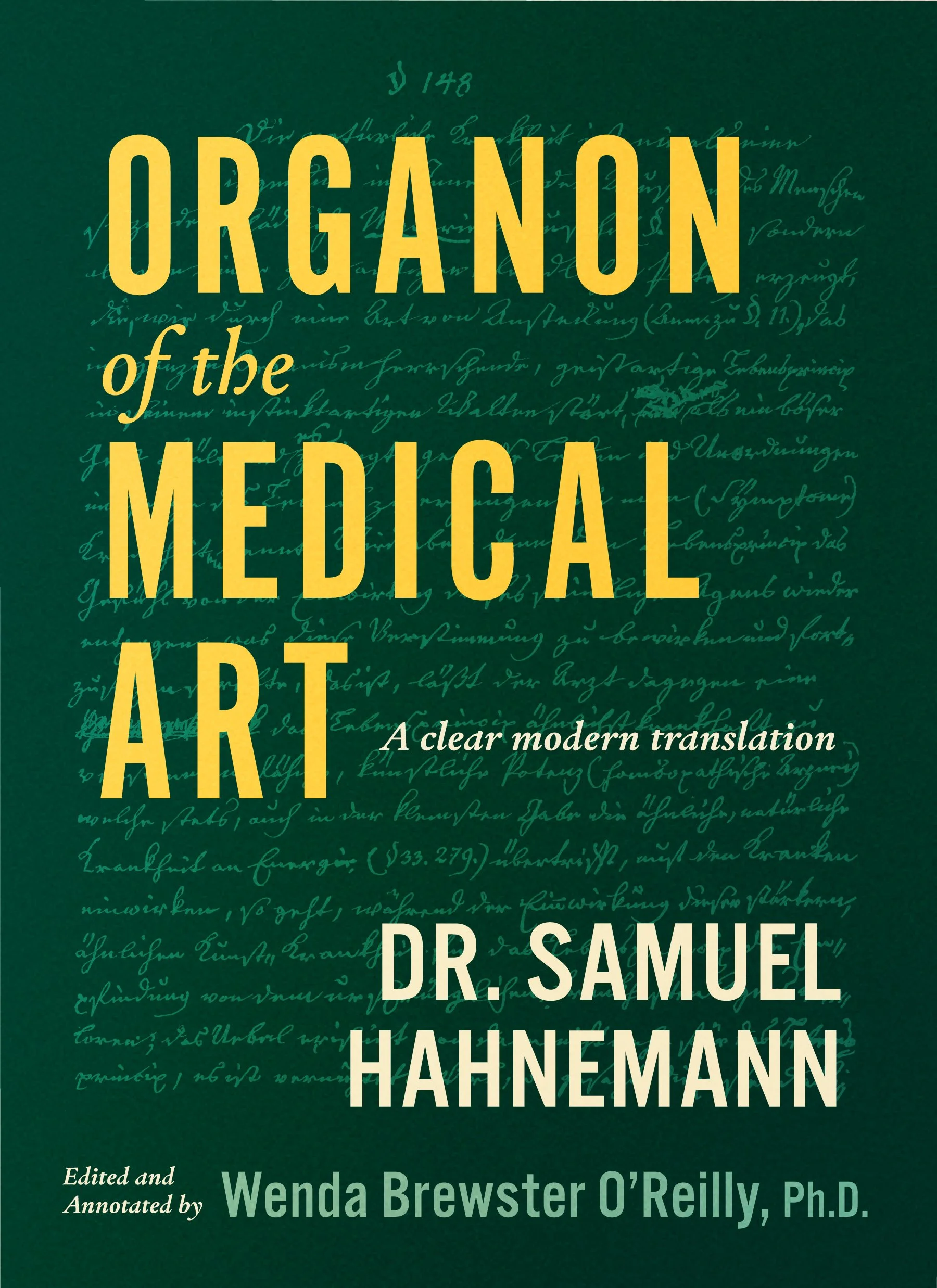
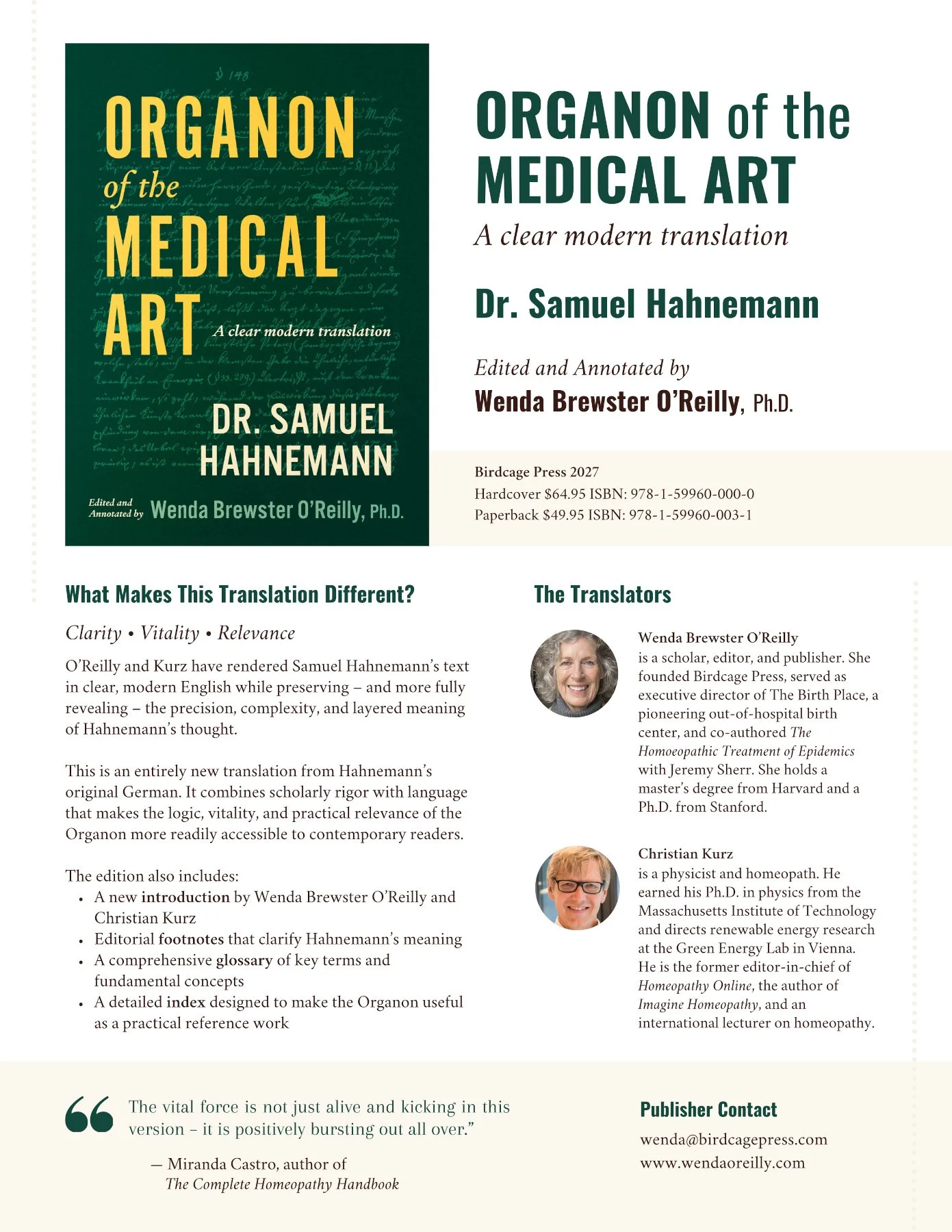
Question prompts about the new Organon translation, for interviewers and reviewers
Why have you made a new translation of the Organon?
How did you and Christian Kurz begin working together?
Can you give a simple example of how the new translation reveals more of Hahnemann’s meaning?
How have you made Hahnemann’s long sentences easier to read?
Are there practical changes as well as changes in language?
How will readers distinguish Hahnemann’s words from editorial additions?
Why does ‘befallment’ appear less often in the new translation?
Why did you replace ‘totality of symptoms’ with ‘entirety of symptoms’?
Does ‘complex of symptoms’ mean the same thing as ‘entirety of symptoms’?
Where do ‘strange, rare, and peculiar’ symptoms fit into that picture?
How is the phrase 'strange, rare, and peculiar' misunderstood?
What is a potence?
How many coined words are in the Organon?
What does Hahnemann mean by ‘miasm’?
What does Wesen mean, and how is it translated now?
Is there a passage that brings several of these changes together?
What do you most hope readers will take from the new translation?
Who should read the Organon?
So the Organon is not just for advanced students of homeopathy?
Why read a book written nearly 200 years ago? Aren’t there easier ways to learn the principles and practice of homeopathy?
How does the Organon apply to medicine today?